
Our group is interested in the molecular mechanisms underlying the control and modulation of developmental timing in vertebrate embryos. We also study the molecular and cellular bases of developmental heterochronies and how they contribute to the evolution of vertebrate body plans. Our approach is integrative, organismal and comparative in nature. A central theme in our work is the importance of developmental modularity in driving evolutionary innovations.
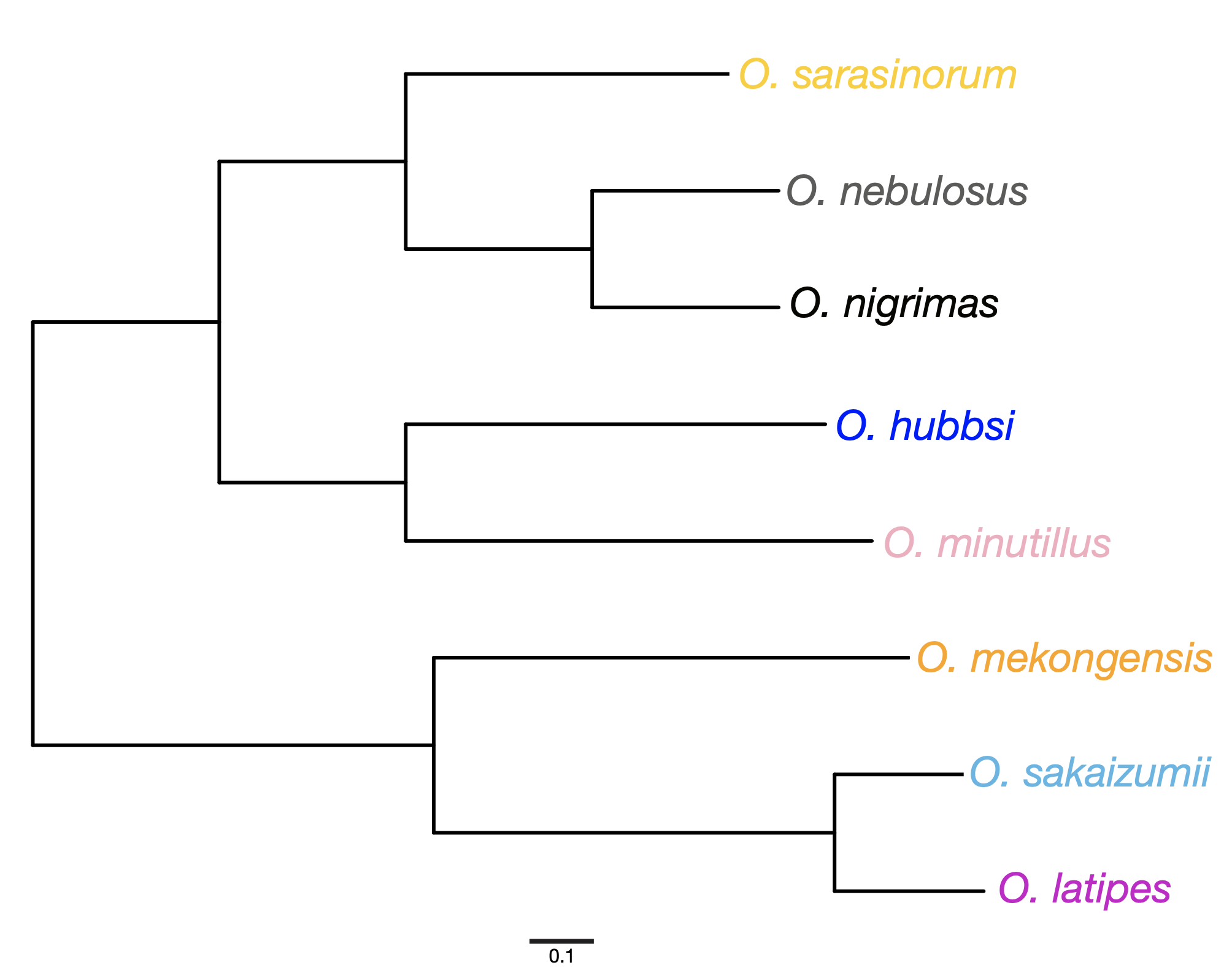
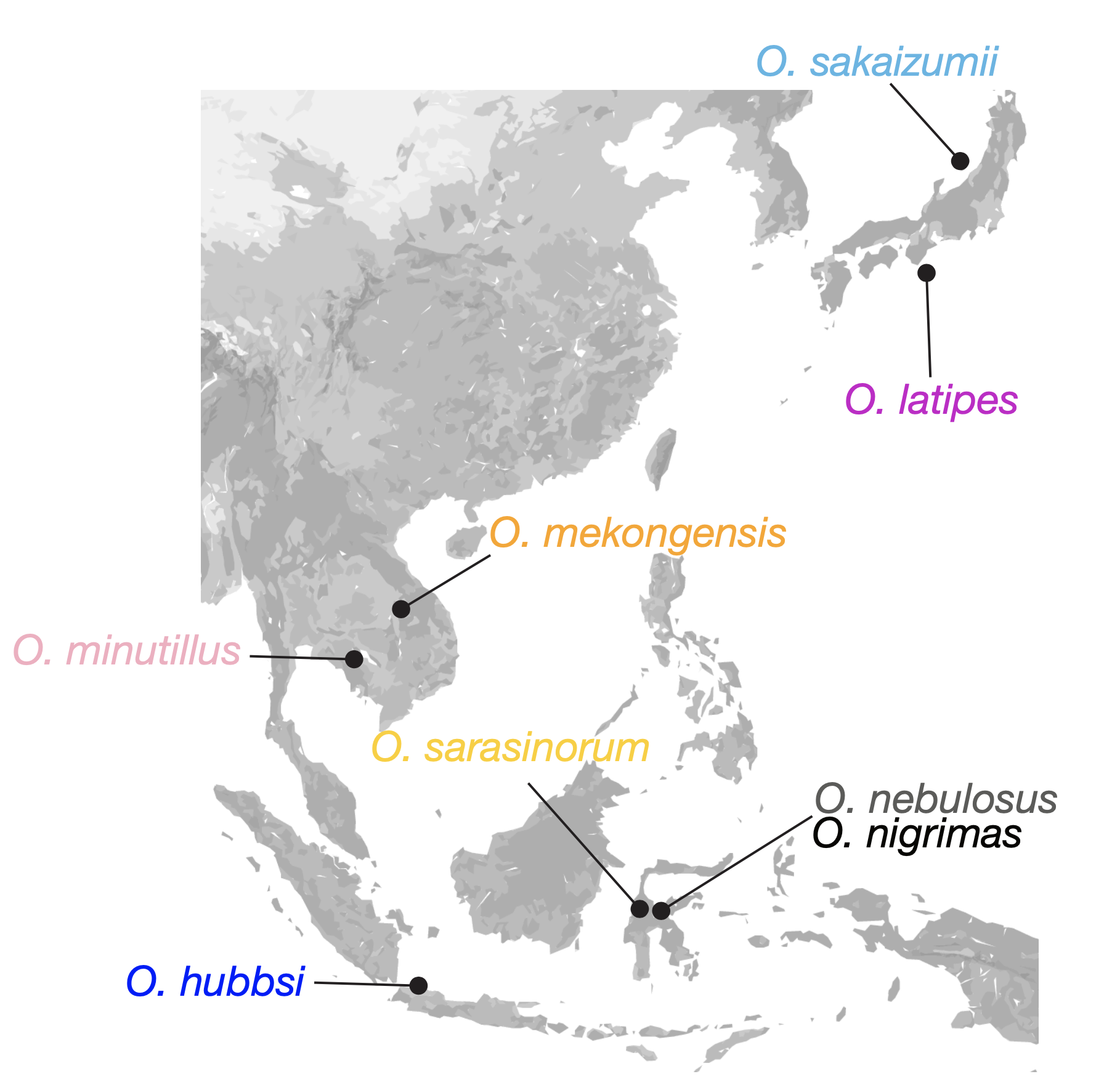
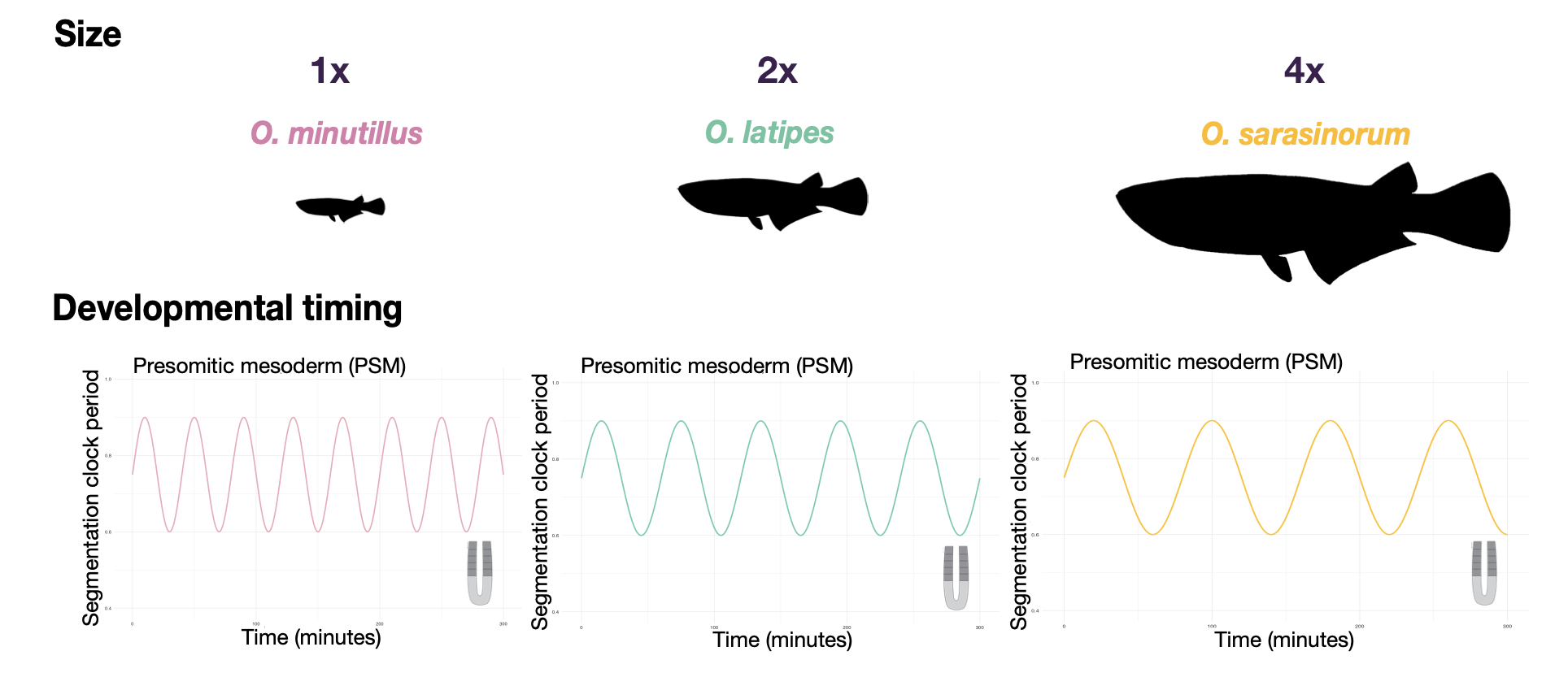
Using a comparative developmental genetics approach, we will exploit the wide natural variation in developmental timing and organismal size that exists across the Oryzias fish genus. By leveraging the power of in-vivo quantitative phenotyping, inter-species genetic hybridization and comparative multi-omics we will uncover the molecular and genetic basis of developmental timing and size control in vertebrates and elucidate how evolutionary tinkering with developmental programs leads to variation in both traits.
We established A. japonica eel embryos as a unique model to study the molecular and cellular bases of developmental heterochronies underlying extreme body plan evolution in vertebrates. We will generate a detailed cellular cartography of embryonic development in A. japonica using sci-RNA sequencing combined with 4D live-imaging, to better understand the molecular, cellular, and morphometric bases of body plan evolution in vertebrates.
The lab will continue developing novel CRISPR/Cas9-mediated knock-in techniques in teleosts. Using our tools, we will generate KI lines for all the major vertebrate signalling pathways (WNT, FGF, NOTCH, HIPPO, ERK) and quantitatively image endogenous protein dynamics in toto during early embryonic development in medaka. Our goal is to link expression histories/heterogeneities with cell fate specification, both under normal conditions and in targeted perturbations.
AG Seleit
Hilde Mangold House
Faculty of Biology
University of Freiburg
Habsburgerstraße 49
79104 Freiburg im Breisgau
Email: ali.seleit@cibss.uni-freiburg.de